
CNC router vs CNC mill: what's the difference, and which do you need?
They look almost identical and are built for opposite jobs
A CNC router removes material fast across a large, flat area - it is built for wood, plastic and sheet goods. A CNC mill is heavy and rigid and built to cut metal precisely, trading speed and working area for the stiffness that steel and aluminium demand. They look alike because both move a spinning cutter under computer control, but they are optimised for opposite jobs. Buy the one that matches the material you actually want to cut - that single question settles most of the decision.
Side by side
| CNC router | CNC mill | |
|---|---|---|
| Built for | Removing material fast across a large area - sheet goods, wood, plastic, foam. | Removing material precisely from hard stock - steel, aluminium, brass, titanium. |
| Structure | A moving gantry over a wide, flat bed. Light and fast, so it can flex under load. | A heavy, rigid frame - often cast iron or welded steel - that resists deflection. |
| Spindle | High RPM, low torque (often 10,000–30,000 RPM). Speed does the cutting. | Lower RPM, high torque. Torque drives a cutter through metal without stalling. |
| Typical envelope | Large and shallow - a 4×4 ft bed is common, Z travel modest. | Small and deep - a compact bed with more Z, because parts are thick, not wide. |
| Materials | Wood, MDF, plywood, acrylic, plastics, foam; soft aluminium at light cuts. | Aluminium, steel, brass, titanium; also wood and plastic, just slowly. |
| Enclosure & coolant | Usually open, with dust extraction for chips and airborne particulate. | Often enclosed, with flood or mist coolant to clear chips and cool the cutter. |
| Price floor | From a few hundred dollars for a desktop learner. | From ~$2,500 for a desktop metal mill; rigidity costs money. |
Rigidity is the whole difference
Everything else follows from one property: stiffness. Cutting metal generates forces that would deflect a router's light gantry enough to ruin the part or snap the cutter. A mill answers those forces with mass - a cast-iron or welded-steel frame that barely moves under load - which is why a desktop metal mill weighs several times what a same-size router does, and costs several times more. You are paying for the iron, and the iron is the point.
A router spends that same weight budget differently: on a large, flat bed that can clear a full sheet of plywood. It removes material quickly because it moves quickly, and it can afford to because wood and plastic push back gently. Ask a router to hold a tolerance in steel and it flexes; ask a mill to surface a 4×4 sheet and it runs out of bed. Neither is a failing - it is what each was built to do.
Spindle: RPM versus torque
A router spindle spins fast - often 10,000 to 30,000 RPM - and cuts by speed. That works beautifully in wood, where a fast, shallow pass shears cleanly. Metal needs the opposite: lower RPM and high torque, so the cutter can take a bite of aluminium or steel without stalling. A high-RPM router spindle put into steel either rubs and burns or stalls; a mill's torquey spindle would scorch wood at the low speeds it prefers. The spindle is tuned to the material, and the material is what you are choosing between.
How to decide in one question
What do you actually want to make? If the answer is signs, furniture parts, cabinetry, acrylic, models or anything in wood and plastic, buy a CNC router. If it is aluminium brackets, steel components, brass fittings or any part that has to hold a tight tolerance in metal, buy a CNC mill - a rigid, enclosed, metal-focused machine, which is a different and generally more expensive class.
The costly mistake is buying a router in the hope of cutting steel “later”. A rigid router will manage light aluminium, and that is a real capability worth having, but it is not a substitute for a mill. If metal is the goal, buy the machine built for it rather than the one that can be coaxed into a little of it. And if you genuinely need both wood volume and metal precision, that is two machines, not one compromise.

FoxAlien XE-Ultra 8080
$1,799.00If your work is wood, plastic and sheet goods, this is our top-scoring CNC router with a live Amazon offer - a large closed-loop machine and the highest router score we hold.
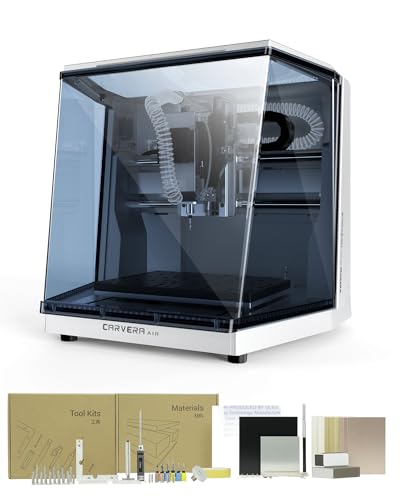
Makera Carvera Air
$2,499.00If your work is metal, start here: an enclosed desktop mill that cuts aluminium and brass, on Amazon - the accessible way into metal without stepping up to a cast-iron machine.
This distinction is why the machines on this site carry a source type and a material range from the manufacturer's own sheet rather than a single “CNC” label - so a router that cuts light aluminium and a mill built for steel are never presented as the same thing. Browse the router rankings or read how we score and source.