Fabrication Machines

Best CNC routers in 2026: 13 Compared

13 machines · Updated August 1, 2026

Ordered by overall computed score

Ranked by the overall computed score - work area, spindle power, motor quality, material breadth, rigidity and value, weighted as published on the methodology page. The honest framing for this list is that "best overall" rewards breadth, and breadth is not what most people actually buy on. A machine that wins here can still be the wrong purchase if your work is entirely 12mm plywood, or entirely small aluminium brackets. Read the score as a summary of published capability, not a verdict on fit. The other lists on this site slice the same catalogue by the thing that usually decides the purchase - envelope, rigidity, price, or how forgiving the machine is while you learn. It is genuinely useful for spotting where a maker has quietly skipped something: two machines a few points apart often differ less in capability than in how much of their specification was published.

Ordering is computed from published specifications. No brand can pay for a position here.

The 13 machines, ranked

#1
FoxAlien · Best overall

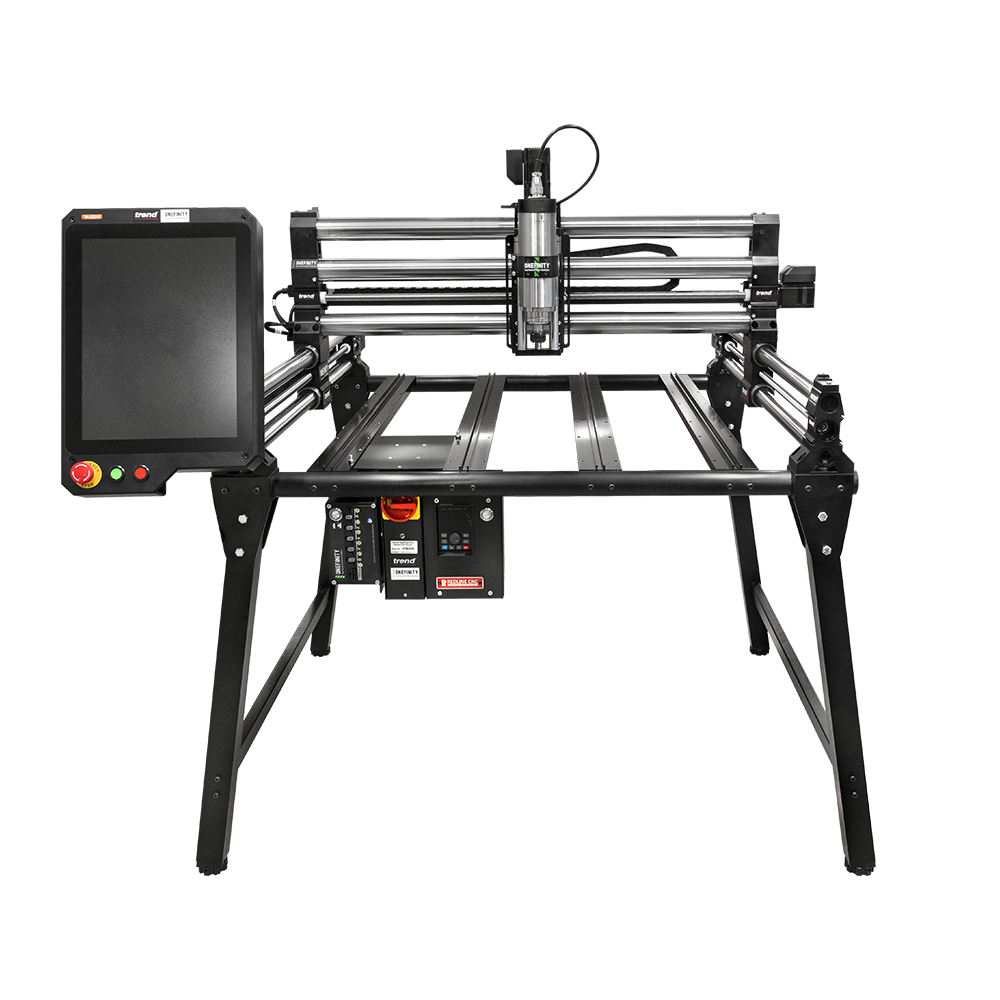
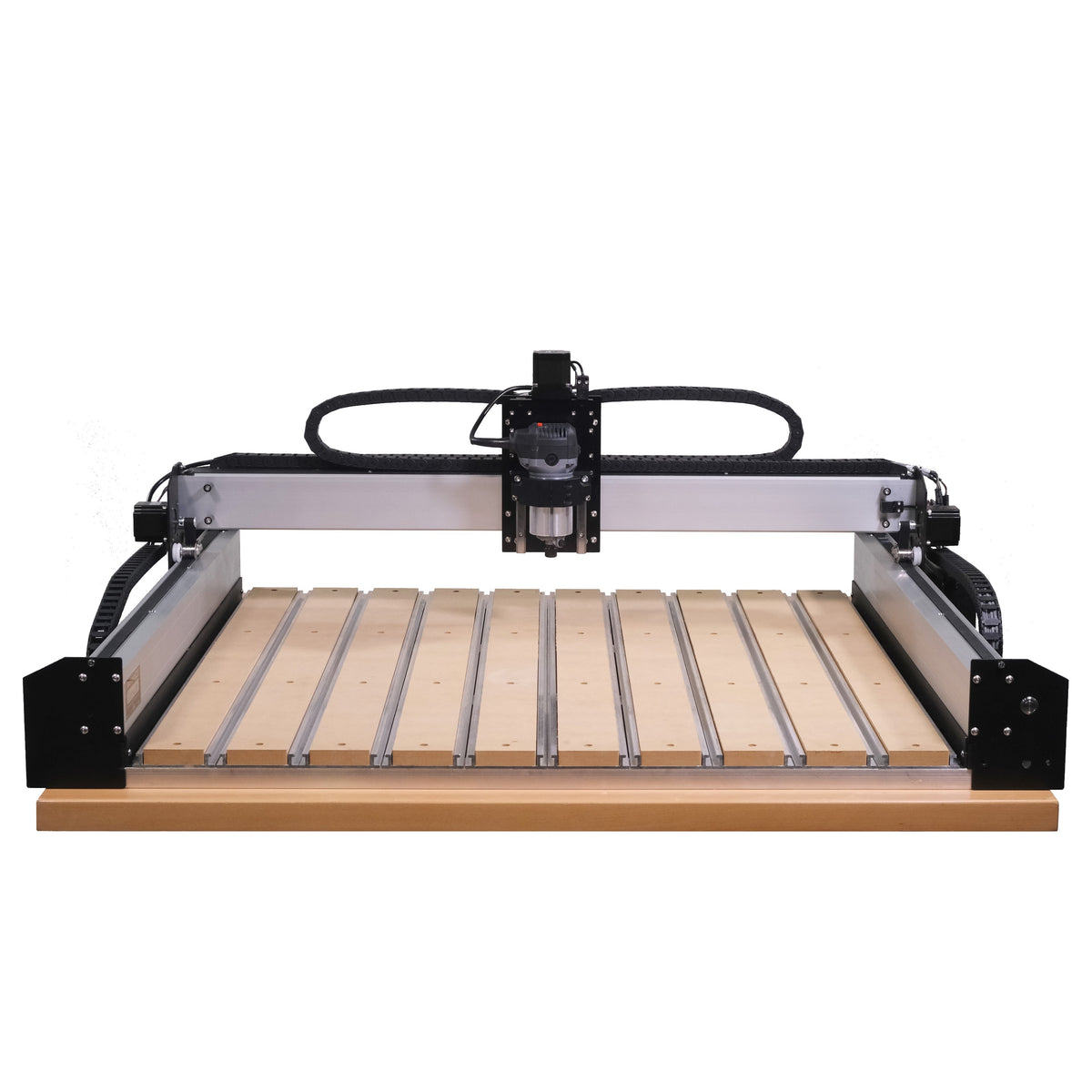
the buyer prioritising working area above all else. Tops the list on published figures, but it is scored on 68% of the model: FoxAlien ships no spindle and states no material range, so the ceiling is unverified rather than proven. What is verified is the motion platform — closed-loop drive, ball screws and profile rails on every axis — which is the part that is expensive to fix later. Read the 89 as 'best of what the maker was willing to publish', and budget for a spindle and a table before comparing it to a machine whose price includes both.

  • 840 × 840 mm
  • No spindle
  • 120 mm Z
#4

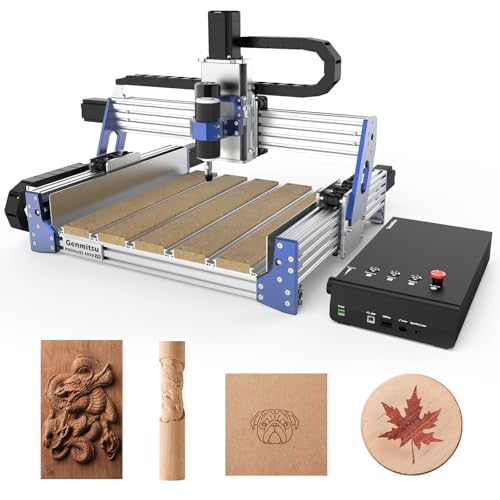
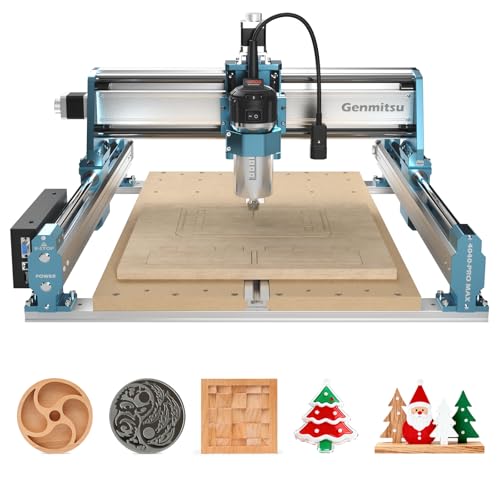
the buyer who wants proven, fully-published capability across wood and light metal. The only machine on this list scored on the complete model, which makes its 67 the most trustworthy number here. It wins nothing on envelope and does not need to: closed-loop control plus ball screws is a specification that usually appears several hundred dollars higher up, and Genmitsu publishes every figure needed to check it. If you want a score you can rely on rather than one caveated by missing data, this is the machine to start from.

  • 400 × 300 mm
  • 400 W spindle
  • 110 mm Z
#7

the buyer who wants the most cutting power per pound and can live with a shallow Z. Mid-table because the specification is genuinely mixed rather than because anything is weak. The 710 W trim router is the most power on the list and the square bed is useful, but the Z envelope is the tightest of the full-size machines and SainSmart never states whether the steppers are closed-loop, so that component is excluded from the score entirely. It is the best-value capable machine here if you can live with shallow stock.

  • 400 × 400 mm
  • 710 W spindle
  • 78 mm Z
#8

the buyer who wants rigid mechanics and understands what open-loop control costs in confidence. Mechanically the most rigid 400mm machine on this list — ball screws and dual profile rails on all three axes — and it still lands mid-table, which is exactly what the scoring model is for. Open-loop control caps the motor component at 55, and the list price is the highest here. On discount it is a strong buy; at list it is asking flagship money for a drive system that cannot detect its own mistakes.

  • 400 × 400 mm
  • 400 W spindle
  • 95 mm Z
#11

the buyer who would rather have documentation and support than a higher number. Scores lowest of the full-size machines, and the score is the least representative thing about it: at 52% coverage, Carbide 3D publishes neither a motor type nor a router rating, so half the model simply cannot be applied. What the number cannot capture is the documentation, the support desk and the size of the community — the things that actually determine whether a beginner finishes projects. Ranked on specs it is mid-pack; ranked on likelihood of success it is not.

  • 445 × 445 mm
  • No spindle
  • 102 mm Z
#12

the budget-first buyer starting small. Last on a list that rewards breadth, which is the correct result for a machine that is not trying to be broad. A 290 x 180mm bed and 40mm of Z is a deliberately small envelope at a deliberately small price, and its 52% coverage reflects unpublished spindle and drive figures rather than bad ones. Judge it against the other entry-level options, not against the 840mm platforms above it.

  • 290 × 180 mm
  • No spindle
  • 40 mm Z

Machines we can't fully score

These qualify for this list but their manufacturers do not publish enough of the specification for our model to characterise them. They are ordered by price.

Compare these 13 CNC routers side by side

Every measure that decides this category, for all 13 machines at once.

MachineScoreWork areaSpindleDrive loopList price
FoxAlien XE-Ultra 808068840 × 840 mmNot includedClosed-loop$1,799.00
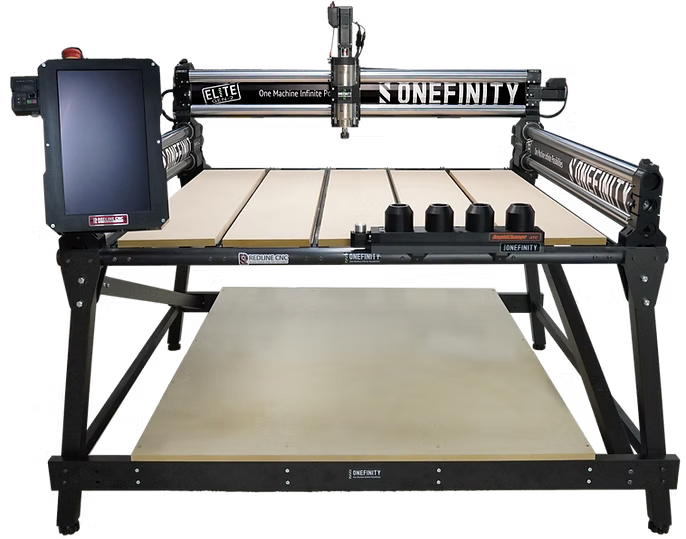
Onefinity Elite Woodworker68838 × 838 mmNot includedClosed-loop$2,195.00
Sienci LongMill MK3 30x3068813 × 813 mmNot includedClosed-loop$1,890 CAD
Genmitsu PROVerXL 4030 V267400 × 300 mm400 WClosed-loop$1,399.00
X-Carve Pro 4x4591,500 WNot stated$7,495.00
Onefinity Apprentice57419 × 419 mmNot includedOpen-loop$995.00
Genmitsu 4040-PRO MAX56400 × 400 mm710 WNot stated$969.00
FoxAlien Vasto53400 × 400 mm400 WOpen-loop$2,299.00
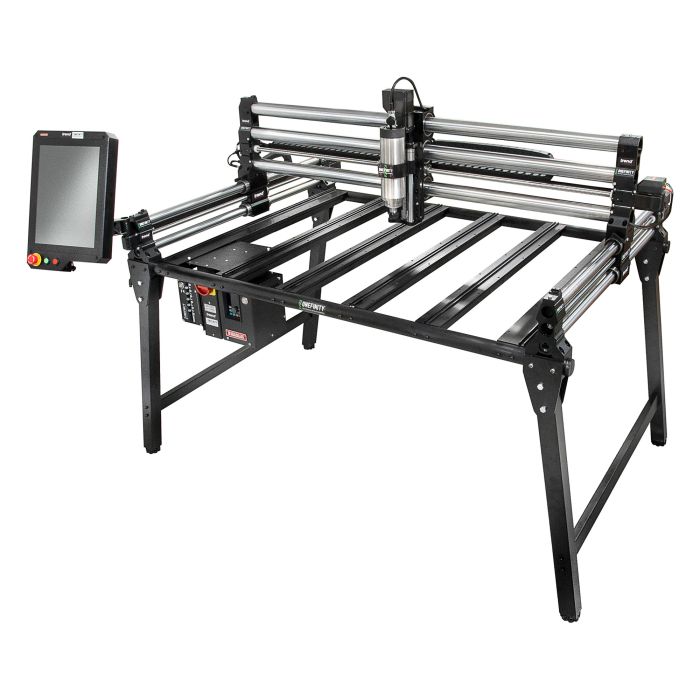
Onefinity Elite Foreman531,245 × 1,248 mmNot includedClosed-loop
Onefinity Elite Journeyman531,245 × 838 mmNot includedClosed-loop
Shapeoko 4 Standard49445 × 445 mmNot includedNot stated$1,800.00
Genmitsu 3018-PROVer V247290 × 180 mmNot includedNot stated$269.00
Shapeoko 5.1 Pro 4x4Not scoredNot includedNot stated$3,800.00

What actually matters when comparing overall

  • Breadth is not fit. An overall score rewards a machine that does many things adequately. If your work is entirely sheet goods or entirely small metal parts, a use-case list on this site will point you somewhere better matched.
  • Coverage before score. A 60 computed on a complete spec sheet is a more trustworthy number than an 80 computed on two-thirds of one, because the missing third could sit anywhere.
  • Total cost, not sticker price. Several machines here ship without a spindle, a table or a dust shoe. A cheaper platform that needs three purchases to cut anything is not cheaper.

The field at a glance

Lowest list priceGenmitsu 3018-PROVer V2
The entry point - and the envelope is the reason it is cheap, not a compromise in build.
Largest work areaOnefinity Elite Foreman
Most bed for the money here. Check the Z clearance before assuming it fits your work.
Highest computed scoreSienci LongMill MK3 30x30
Tops the model, but on 68% coverage - strong on what is published rather than proven throughout.
Best score per dollarGenmitsu 3018-PROVer V2
The most computed capability per pound spent - not the same question as which machine is best.

Common mistakes to avoid

  • Reading the overall score as a verdict on fit. This list rewards breadth across every measure, which is not what most people buy on. A machine that wins here can still be the wrong purchase if your work is entirely 12mm plywood, or entirely small aluminium brackets - the use-case lists slice the same catalogue by the thing that usually decides the choice.
  • Comparing a bare platform against a complete machine. 9 machines on this list ship without a spindle, and sometimes without a table or spoilboard either. That price is not comparable to one that includes a cutter until you have added the missing parts, which can be several hundred dollars.
  • Assuming an open-loop machine will hold position under load. Open-loop steppers cannot detect a lost step. In hardwood at depth, or in any metal, that means a part that quietly goes wrong partway through with no error on the controller and no obvious cause afterwards.
  • Cutting slower when the edge burns. It is the most common instinct and it is backwards. A burn means the chip is too thin to carry heat out of the cut, so the cutter is rubbing rather than shearing - feed faster or drop the spindle speed. The chip load calculator will confirm which side of the range you are on before you change anything.

Understanding desktop CNC routers

A CNC router is a gantry that moves a spinning cutter through three axes under G-code control. What separates one from another is almost never the software - most desktop machines run GRBL and accept the same toolpaths - but the mechanics: how the motion is driven, how rigidly the gantry resists the cutting forces pushing back at it, and whether the controller knows where the tool actually is rather than where it commanded it to be.

Drive type is the clearest dividing line. Belts are cheap, forgiving of a crash and quick to replace, but they stretch under load. Lead screws are stiffer and slower. Ball screws are stiffer again and back-drive far less, which is why they appear on machines aiming at metal or at precision in hardwood.

Control is the other. An open-loop stepper is told to move and assumed to have moved; a closed-loop one reports back, so the controller knows when a step was lost and can correct it. On wood the difference is often invisible. On anything where the part has to be dimensionally right, it is the whole ballgame.

How this ranking works

The order on this page is computed, not curated. Every machine is scored from the specifications its manufacturer publishes, using weights documented in full on the methodology page, and no brand can pay to move up. The affiliate links on this site never touch the score - ranking and monetisation are calculated by separate functions that do not share data.

The caveat that matters most is coverage. Our model excludes any component a maker has not published rather than scoring it zero, then renormalises across what is left - so a machine scored on 30% of the model is not directly comparable to one scored on 100%. 12 of the 13 machines here fall short of full coverage. Read a high score on thin coverage as "strong on what we can verify", not as a verdict on the whole machine, and treat the gap as an unknown you would be inheriting.

Prices are dated observations refreshed daily from retailer APIs, not live quotes, and anything unconfirmed for more than 72 hours is labelled availability-unknown rather than shown as current. Specifications come from manufacturer product pages only - never from marketplace listing copy, which is written to sell rather than to describe.

This list sorts purely on the overall computed score, which is a weighted blend of all six components: work area at 22, spindle power at 18, motor quality at 16, rigidity at 15, value at 15 and material breadth at 14. Nothing here is hand-placed. Because the model renormalises around unpublished specs rather than scoring them zero, a machine with high coverage and a lower number can be a safer buy than a higher-scoring one built on partial data - read the coverage column alongside the score.

The full weighting model and the reference scales are on the methodology page.

Buying questions, answered

What is the best overall CNC router?
By our computed score it is whichever machine tops this list, but 'best overall' rewards breadth of published capability rather than fit for your work. If your projects are all sheet goods or all small aluminium parts, one of the use-case lists on this site will point you at a better-matched machine than the top of this one.
Does a higher score always mean a better machine?
No. A score rests only on the specifications a maker actually publishes; the coverage percentage tells you how much of the model it covers. A 60 on full data is often a more trustworthy number than an 80 on two-thirds coverage, because the unpublished parts of the second machine could sit anywhere.
Can a brand pay to rank higher here?
No. The ordering is computed from published specifications by a formula documented on the methodology page, and affiliate offers are never an input to the score. The commercial links on a machine's page do not move it up or down this list.

Other rankings

Share