BINSTAK
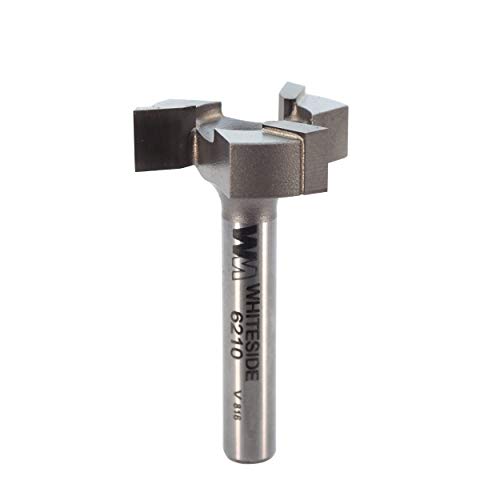
BINSTAK Spoilboard Surfacing Bit, 1/4in Shank
A wider cutting diameter clears the bed in fewer passes. Run it slowly with a big stepover - this is a finishing operation on a sacrificial surface, not a production cut.
$19.99
at Amazon

Sacrificial bed material and the cutters that flatten it.
A spoilboard is the sacrificial surface you cut into, and surfacing it is how you make the bed parallel to the gantry rather than parallel to the floor. That distinction is the whole point: your machine does not care whether the table is level, it cares whether the cutter stays the same distance from the work across the whole envelope. Only a surfacing pass taken by the machine itself can guarantee that.
Choose a surfacing cutter by diameter. A wider cutting diameter clears the bed in fewer passes and leaves fewer overlap marks; a narrower one asks less of a light gantry. Anything over about 25mm of cutting diameter is asking real torque from a trim router, so match the bit to the machine rather than to the bed size.
Each geometry carries its own chip-load penalty - the feed & speed calculator applies them and shows the factor separately.
Surfacing bits are almost universally 1/4-inch shank, because the cutting forces across a wide insert are more than a 1/8-inch shank should carry. If your machine only accepts 1/8-inch tooling, surface in narrower passes with a straight cutter rather than forcing a large surfacing bit into an adapter.
The board itself has to clear the gantry. Adding an 18mm spoilboard raises the work by 18mm and takes exactly that much out of your usable Z travel - on a machine with shallow clearance, that can decide whether a job fits at all.
How you fix the board down decides how often you can skim it. Threaded inserts or T-nuts let you lift and replace the board without drilling the bed again; screws driven straight into the bed are quicker, and become a problem the third time you skim and start finding fastener heads with a carbide cutter.
Every product below lists the machines it fits; machine pages list the consumables matched to their collet. Browse the machine database to check yours.
One surfacing bit lasts a long time, because it is used rarely and cuts a soft sacrificial material. The spoilboard itself is the consumable - MDF is the usual choice because it is flat, cheap and cuts predictably, and it is expected to be resurfaced several times before replacement.
Resurface when cut depth stops being consistent corner to corner, and always after installing or re-levelling the bed. Take the lightest pass that cleans up the whole surface: every pass costs thickness you cannot get back.
A wider cutting diameter clears the bed in fewer passes. Run it slowly with a big stepover - this is a finishing operation on a sacrificial surface, not a production cut.
Surfacing the spoilboard is how you make the bed parallel to the gantry rather than parallel to the floor. Do it after assembly, and again whenever cut depth stops being consistent corner to corner.