#1
53/100
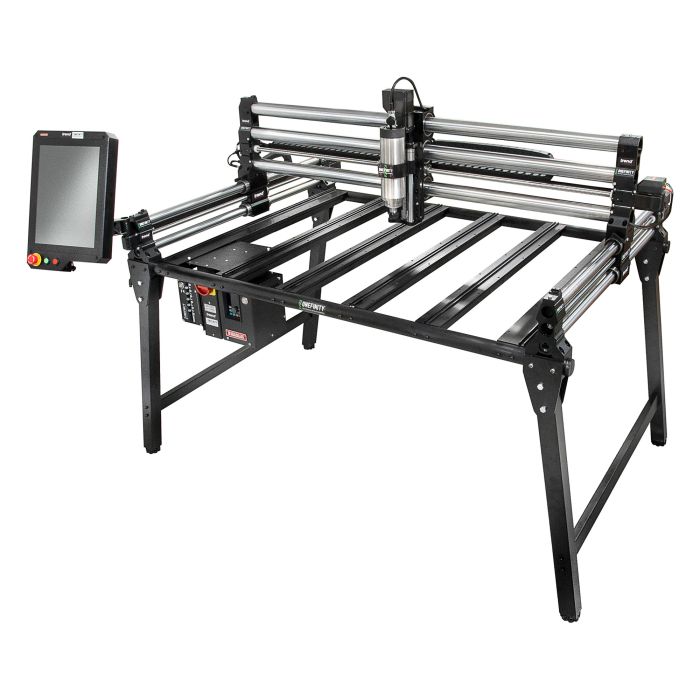
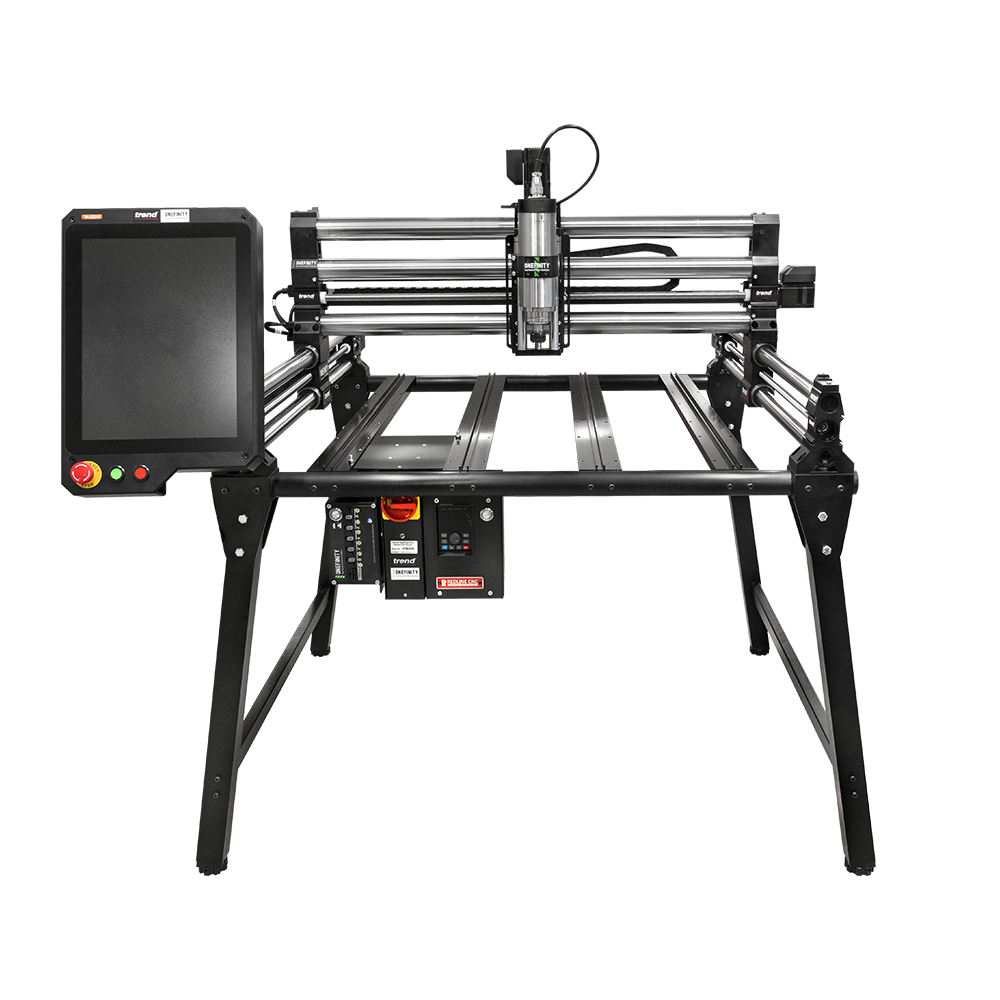
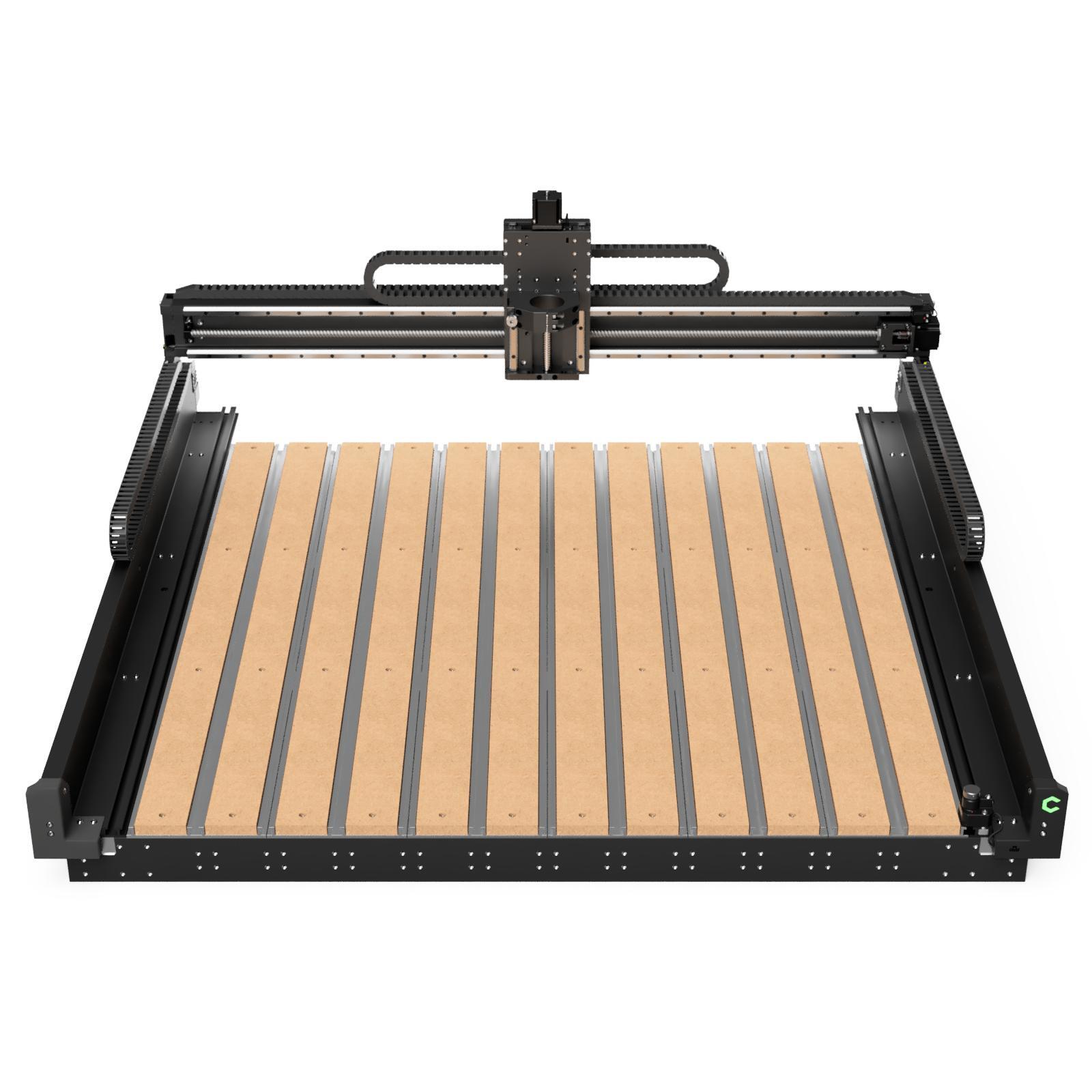
Onefinity · Best for woodworking
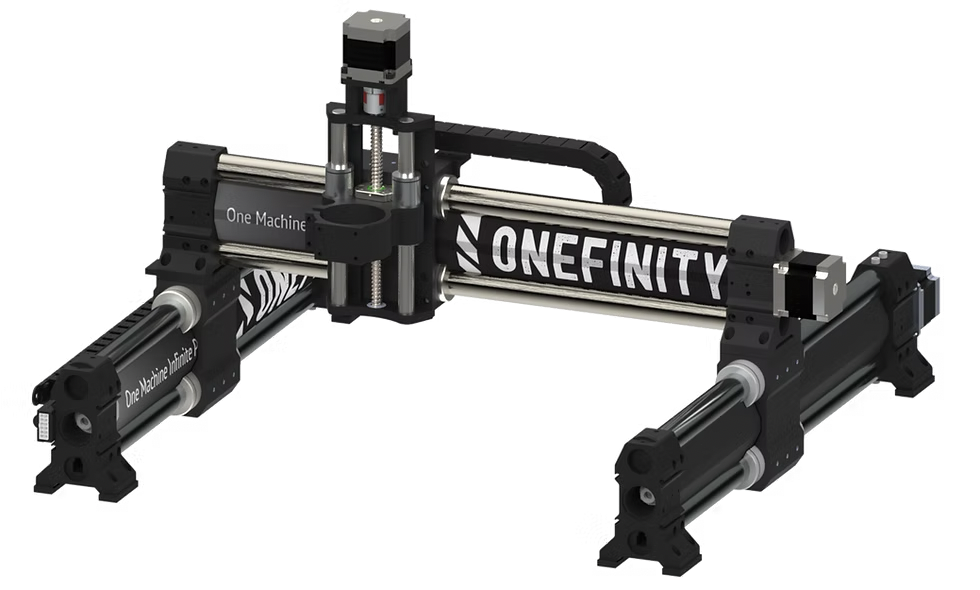
the furniture and cabinet maker who needs a real piece of a full sheet on the bed.
- 1,245 × 1,248 mm
- No spindle
- 163 mm Z

13 machines · Updated August 1, 2026
Ordered by usable cutting envelope
Ranked on usable cutting envelope, because in woodworking the bed size decides what you can make more directly than any other figure. Sheet goods set the floor: a machine that cannot take a useful piece of a 1220 x 2440mm sheet will have you cutting stock down by hand before every job. Above that, spindle power decides how deep a pass hardwood will tolerate, and dust extraction decides whether the shop is habitable - MDF dust in particular is a respiratory hazard, not a housekeeping problem. Grain direction and bit geometry matter more here than on any other list: compression bits for plywood veneer, downcut for a clean top edge, upcut where heat needs to leave the cut. Burn marks almost always mean the feed is too slow rather than too fast.
Ordering is computed from published specifications. No brand can pay for a position here.
the furniture and cabinet maker who needs a real piece of a full sheet on the bed.
the furniture and cabinet maker who needs a real piece of a full sheet on the bed.
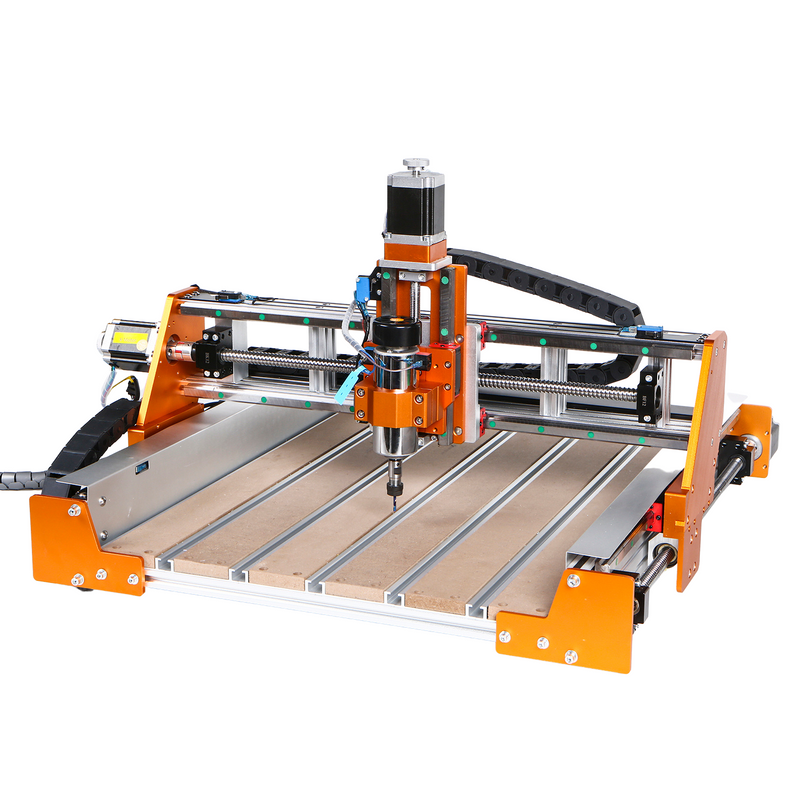
the furniture and cabinet maker who needs a real piece of a full sheet on the bed. An 840mm square envelope is the only bed here that takes a genuinely useful piece of a full sheet without breaking the job into tiles, which is why it leads a list ranked on cutting area. The catch specific to woodworking is that the price includes neither a spindle nor a table — and a spoilboard is not optional for sheet work, it is what you cut into. Budget for both before comparing it against the machines below.
the furniture and cabinet maker who needs a real piece of a full sheet on the bed.
the furniture and cabinet maker who needs a real piece of a full sheet on the bed.
cabinet doors, large signage and panel work - the biggest bed here that still fits a bench. The second-largest bed on the list and the one best supported for sheet goods, with a dust boot included rather than sold separately — which matters more in wood than any other material. The limitation is belts: they are forgiving and cheap, but they will not hold position against the sustained side load of a long hardwood pass the way a ball screw does. Ideal for plywood and softwood, less so for deep cuts in oak.
mid-size panels and signage on a rigid frame, working within a modest envelope.
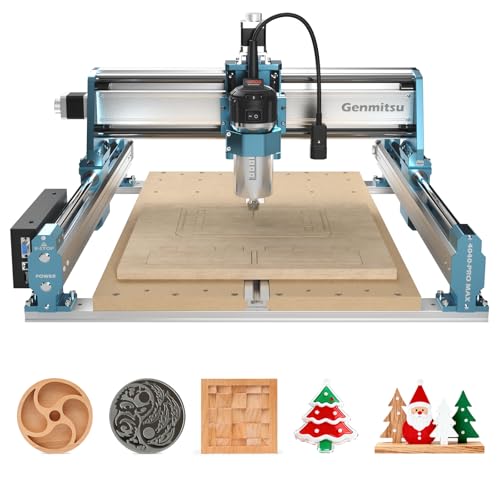
hardwood-heavy work at mid size, where pass depth matters more than reach. The best hardwood machine here on power alone: 710 W and a 30,000 RPM ceiling let you run the feed rate the chip-load charts actually recommend, which is what prevents burning. The 78mm Z is the real constraint for woodworking — fine for sheet goods and relief carving, restrictive the moment you want to surface thick stock or work over a jig.
mid-size panels and signage on a rigid frame, working within a modest envelope. A 400mm square bed with ball screws and profile rails is a rigid platform for hardwood, and rigidity is what lets you take a deeper pass without chatter. Open-loop control is a far smaller liability in wood than in metal — a lost step usually shows as a visible step in the cut you can catch and recut. The obstacle is price: at list it costs more than machines with larger beds.
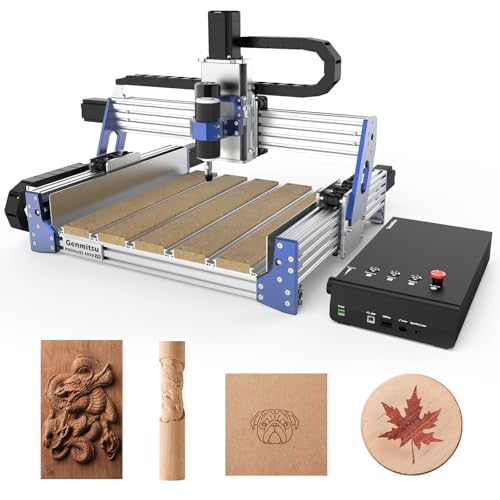
joinery and thicker stock, where vertical clearance matters more than bed area. The 400 x 300mm bed is the smallest of the full-size machines here, which for sheet goods is the binding constraint — you will be cutting stock down before most jobs. What it offers woodworking is repeatability: closed-loop control means a two-hour carve ends where it should, which matters most on the long finishing passes that relief work depends on.
small woodworking - inlays, boxes and detail work rather than sheet goods. Not a woodworking machine in any practical sense — 290 x 180mm with 40mm of Z rules out sheet goods entirely and limits you to small signs, inlays and test pieces. It is on this list because it does cut wood well at its size, and because a small machine is the cheapest place to prove a toolpath before committing it to expensive stock.
small woodworking - inlays, boxes and detail work rather than sheet goods.
These qualify for this list but their manufacturers do not publish enough of the specification for our model to characterise them. They are ordered by price.
Carbide 3D does not publish cutting area, spindle power, motor quality and materials.
Every measure that decides this category, for all 13 machines at once.
| Machine | Work area | Z travel | Spindle | Frame | Score |
|---|---|---|---|---|---|
| Onefinity Elite Foreman | 1,245 × 1,248 mm | 163 mm | Not included | Not stated | 53 |
| Onefinity Elite Journeyman | 1,245 × 838 mm | 163 mm | Not included | Not stated | 53 |
| FoxAlien XE-Ultra 8080 | 840 × 840 mm | 120 mm | Not included | aluminium | 68 |
| Onefinity Elite Woodworker | 838 × 838 mm | 163 mm | Not included | Not stated | 68 |
| Sienci LongMill MK3 30x30 | 813 × 813 mm | 130 mm | Not included | Not stated | 68 |
| Shapeoko 4 Standard | 445 × 445 mm | 102 mm | Not included | Not stated | 49 |
| Onefinity Apprentice | 419 × 419 mm | 114 mm | Not included | Not stated | 57 |
| Genmitsu 4040-PRO MAX | 400 × 400 mm | 78 mm | 710 W | all aluminium | 56 |
| FoxAlien Vasto | 400 × 400 mm | 95 mm | 400 W | all metal | 53 |
| Genmitsu PROVerXL 4030 V2 | 400 × 300 mm | 110 mm | 400 W | metal | 67 |
| Genmitsu 3018-PROVer V2 | 290 × 180 mm | 40 mm | Not included | all aluminium | 47 |
| X-Carve Pro 4x4 | — | 165 mm | 1,500 W | Not stated | 59 |
| Shapeoko 5.1 Pro 4x4 | — | 155 mm | Not included | Not stated | Not scored |
| Lowest list price | Genmitsu 3018-PROVer V2 The entry point - and the envelope is the reason it is cheap, not a compromise in build. |
|---|---|
| Largest work area | Onefinity Elite Foreman Most bed for the money here. Check the Z clearance before assuming it fits your work. |
| Highest computed score | Sienci LongMill MK3 30x30 Tops the model, but on 68% coverage - strong on what is published rather than proven throughout. |
| Best score per dollar | Genmitsu 3018-PROVer V2 The most computed capability per pound spent - not the same question as which machine is best. |
A CNC router is a gantry that moves a spinning cutter through three axes under G-code control. What separates one from another is almost never the software - most desktop machines run GRBL and accept the same toolpaths - but the mechanics: how the motion is driven, how rigidly the gantry resists the cutting forces pushing back at it, and whether the controller knows where the tool actually is rather than where it commanded it to be.
For woodworking the binding constraint is usually the bed. Sheet goods arrive in standard sizes, and a machine that cannot take a useful fraction of one changes how you work - every job starts with breaking stock down by hand, which is the labour a CNC was supposed to remove.
The second constraint is dust, and it is the one people underestimate. A router removes material as airborne particulate rather than as chips you can sweep, and MDF and composites in particular produce a fine fraction that stays suspended long after the machine stops. Extraction at the cutter is part of the machine, not an accessory to add later.
The order on this page is computed, not curated. Every machine is scored from the specifications its manufacturer publishes, using weights documented in full on the methodology page, and no brand can pay to move up. The affiliate links on this site never touch the score - ranking and monetisation are calculated by separate functions that do not share data.
The caveat that matters most is coverage. Our model excludes any component a maker has not published rather than scoring it zero, then renormalises across what is left - so a machine scored on 30% of the model is not directly comparable to one scored on 100%. 12 of the 13 machines here fall short of full coverage. Read a high score on thin coverage as "strong on what we can verify", not as a verdict on the whole machine, and treat the gap as an unknown you would be inheriting.
Prices are dated observations refreshed daily from retailer APIs, not live quotes, and anything unconfirmed for more than 72 hours is labelled availability-unknown rather than shown as current. Specifications come from manufacturer product pages only - never from marketplace listing copy, which is written to sell rather than to describe.
Woodworking ranks on usable cutting envelope, largest first, because bed size decides what you can make more directly than any other figure here. Spindle power and Z travel are surfaced next: power sets how deep a pass hardwood tolerates, and Z decides whether thick stock and jigs fit at all. Score is shown but deliberately not the sort key - a machine that cannot take a useful piece of a sheet is the wrong machine whatever its number, and that is a call the envelope makes, not the score.
The full weighting model and the reference scales are on the methodology page.